

Wireless Charging: 30% Efficiency Impact & Repair Guide

Wireless Charging: 30% Efficiency Impact & Repair Guide
You’ve likely heard that wireless charging slowly destroys your smartphone battery. That myth stops many repair professionals from confidently servicing wireless charging issues. The truth? Modern Qi wireless charging has battery degradation rates comparable to wired charging when used properly. Understanding the physics behind wireless power transfer and its components unlocks effective troubleshooting skills that set you apart in the competitive repair market.
Key Takeaways
| Point | Details |
|---|---|
| Electromagnetic Induction Powers It | Wireless charging transfers energy through transmitter and receiver coils using alternating magnetic fields. |
| Qi Standard Dominates Market | The Qi protocol commands over 80% market share and includes critical safety features like Foreign Object Detection. |
| Alignment Affects Performance | Coil misalignment beyond 5mm reduces charging efficiency by approximately 30%. |
| Common Failures Have Simple Causes | Most faults stem from damaged coils, poor alignment, or uncertified chargers causing overheating. |
| Repair Knowledge Builds Customer Trust | Understanding internal components and standards helps you diagnose issues faster and educate clients effectively. |
Introduction to Wireless Charging Technology
Wireless charging eliminates physical connectors using electromagnetic fields, improving convenience and reducing wear. The technology evolved from early 19th century electromagnetic experiments into practical smartphone applications starting around 2012. Today, wireless charging appears as a standard feature across most flagship devices from Apple, Samsung, and other manufacturers.
Why should repair professionals care? Your customers expect wireless charging support. When it fails, they bring devices to you. Understanding how the technology works positions you to diagnose problems quickly, source correct replacement parts, and explain issues clearly to worried device owners.
The repair advantage goes beyond fixing broken components. You become a trusted advisor who can recommend wireless charging basics and help customers make informed decisions about accessories. This knowledge reduces repeat repairs caused by incompatible chargers or user misunderstanding.
Wireless charging also reduces mechanical stress on charging ports, potentially decreasing one common repair request. However, it introduces new failure points you must recognize. Mastering this technology expands your service capabilities and sets you apart from competitors who avoid newer charging systems.
How Wireless Charging Works: The Physics Behind It
The magic behind wireless charging is electromagnetic induction, a principle discovered by Michael Faraday in 1831. Here’s how energy moves from charger to phone:
- Alternating current flows through the transmitter coil inside your charging pad
- This current creates a fluctuating magnetic field around the coil
- The magnetic field extends outward and intersects with the receiver coil in your phone
- The changing magnetic field induces an alternating current in the receiver coil
- A rectifier circuit converts this AC into DC power to charge the battery
Charging typically occurs at frequencies between 100 and 205 kHz using alternating current in the transmitter coil. The frequency must remain stable to maintain efficient power transfer without generating excessive heat or electromagnetic interference.
Several factors determine how efficiently power transfers from pad to phone. Distance matters tremendously. Moving the coils just a few millimeters apart dramatically reduces efficiency. Coil misalignment greater than 5mm can reduce charging efficiency by about 30%.
Coil size and design also impact performance. Larger coils create stronger magnetic fields but require more space and energy. Most smartphones use compact spiral coils optimized for their specific form factors. The transmitter coil in your charging pad typically measures larger than the receiver to create a broader charging zone.
“Think of wireless charging like trying to catch water from a fountain. Stand directly under the stream with a wide bucket and you catch most of it efficiently. Step to the side or use a tiny cup and you waste most of the water.”
Pro Tip: When examining detailed wireless charger mechanics during repairs, check for ferrite sheets behind coils. These magnetic materials concentrate the field, boosting efficiency and reducing heat generation.
Wired charging remains more efficient overall, often delivering 80 to 90% efficiency compared to 70 to 80% for wireless. The convenience trade off makes sense for many users, but repair pros should understand this difference when advising customers about charging habits and electricity costs.
Smartphone Components for Wireless Charging
Inside every wireless charging capable phone, several specialized components work together to receive and manage power:
- Receiver Coil: A flat spiral coil typically made of thin copper wire, positioned near the phone’s back panel for optimal signal reception
- Rectifier Circuit: Converts the alternating current induced in the receiver coil into direct current suitable for battery charging
- Power Management IC: Regulates voltage and current flow, monitors temperature, and implements safety protocols to protect battery health
- Shielding Materials: Ferrite sheets and thermal barriers prevent interference and manage heat dissipation during charging
The receiver coil design varies by manufacturer and model. Some phones use circular coils centered on the back panel, while others employ rectangular designs positioned higher or lower. The receiver coil, rectifier, and power management ICs convert electromagnetic induction output into usable DC power for the battery.
Physical installation requires precision. The coil must sit close enough to the back panel for effective coupling with external chargers, yet far enough from other components to avoid electromagnetic interference with NFC antennas, cameras, or logic boards. Many modern phones integrate the wireless charging assembly into the back cover itself, making replacement straightforward but expensive.
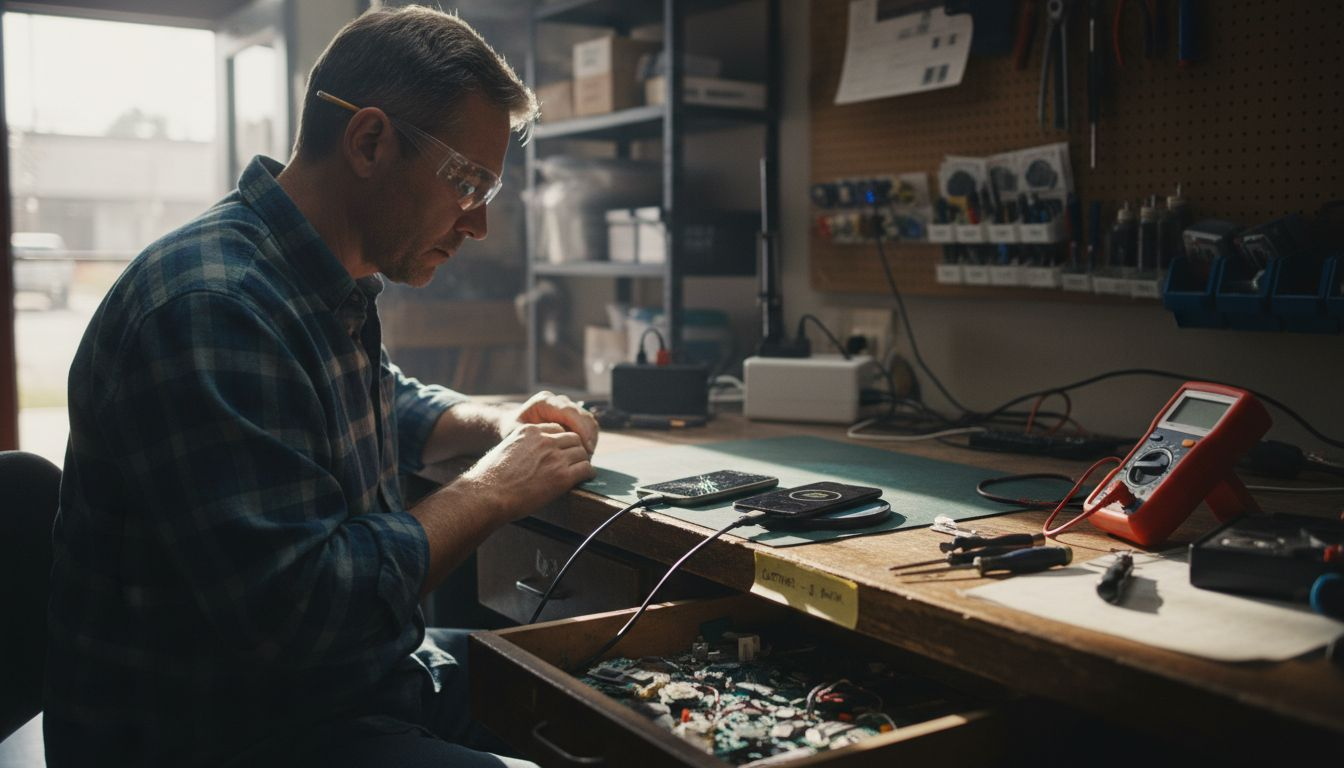
Common wear issues during repairs include accidentally damaging the thin receiver coil during screen or battery replacement, dislodging the connector that links the coil to the smartphone motherboard components, or disturbing the precise alignment needed for optimal performance. Always disconnect the battery before working near wireless charging components.
Pro Tip: Before reassembly, test wireless charging function with a known good charger. Catching alignment or connection issues before closing the device saves time and prevents customer callbacks.
Wireless Charging Standards and Compatibility
Three main wireless charging standards emerged, though one clearly dominates today:
| Standard | Frequency | Market Share | Key Features |
|---|---|---|---|
| Qi | 100-205 kHz | 80%+ | Foreign Object Detection, universal smartphone support |
| PMA | 277-357 kHz | Deprecated | Older Powermat system, largely abandoned |
| AirFuel | 6.78 MHz | Growing in IoT | Resonant charging, limited smartphone adoption |
Qi standard dominates over 80% of wireless charging market and includes safety features like Foreign Object Detection. The Wireless Power Consortium maintains and updates Qi specifications, ensuring interoperability between certified devices and chargers from different manufacturers.
Foreign Object Detection represents a critical safety feature. The system monitors for metal objects like coins, keys, or paperclips between the charger and phone. When detected, charging stops immediately to prevent dangerous heating of foreign materials. This protection helps repair professionals explain why some thick cases or magnetic accessories interfere with charging.
PMA once competed seriously with Qi, backed by companies like Duracell Powermat. By 2018, most manufacturers abandoned PMA in favor of Qi’s broader adoption. You’ll rarely encounter PMA devices in modern repair work, but older devices might still use the standard.
AirFuel Alliance promotes resonant wireless charging at higher frequencies. This technology allows greater charging distances and more flexible positioning. However, few smartphones support AirFuel, making it less relevant for current repair operations. Focus your parts inventory and diagnostic knowledge on smartphone charging standards that emphasize Qi compatibility.
For repair professionals, prioritize Qi certified replacement coils and recommend Qi certified chargers to customers. Certification ensures components meet safety and performance standards, reducing failure rates and protecting your reputation.
Common Misconceptions About Wireless Charging
Several persistent myths about wireless charging confuse customers and complicate repair diagnostics:
- Myth: Wireless charging significantly degrades battery health faster than cables
- Reality: Battery degradation using wireless charging is comparable to wired charging when quality chargers and temperature controls are used
- Myth: All wireless chargers work equally well with any phone
- Reality: Power output varies wildly, and non certified chargers may lack proper thermal management or foreign object detection
- Myth: Wireless charging is always slower than wired charging
- Reality: Modern fast wireless chargers deliver 15W or more, matching many basic wired chargers in practical charging times
The battery health misconception causes the most confusion. Heat, not the wireless charging method itself, poses the real threat to lithium batteries. Quality wireless chargers include thermal monitoring and throttle power delivery when temperatures rise. Cheap, uncertified chargers skip these protections, leading to overheating and accelerated battery wear.
Charging speed depends on multiple factors beyond just wireless versus wired delivery. The charger’s maximum power output, phone’s charging circuit limits, battery state of charge, and ambient temperature all influence speed. A premium 15W wireless charger often outperforms a basic 5W wired adapter.
“Many customers blame wireless charging for battery issues that actually result from leaving phones in hot cars, using counterfeit chargers, or natural battery aging. Your expertise helps identify real causes.”
Universal compatibility remains another misconception. While Qi standardization helps, not every Qi charger optimally charges every Qi phone. Apple devices charge fastest with MagSafe or Qi certified chargers supporting their specific power profiles. Samsung phones benefit from chargers certified for their Fast Charge protocols.
Educating customers prevents misuse and supports better repair outcomes. When you explain wireless charging myths clearly, clients trust your recommendations and avoid wireless charger mistakes that damage devices. This knowledge also helps you recommend appropriate wireless charger variety options that match customer needs and budgets.
Troubleshooting and Repairing Wireless Charging
When customers report wireless charging problems, systematic diagnosis saves time and prevents unnecessary part replacements. Common symptoms include:
- Phone not charging at all when placed on pad
- Intermittent charging that starts and stops repeatedly
- Excessive heat generation during charging
- Very slow charging speeds compared to wired charging
Start diagnostics by testing with a known good, Qi certified charger. Many “wireless charging failures” actually result from faulty or incompatible charging pads. If the phone charges normally on your test charger, educate the customer about charger quality and send them home with a recommendation.
When the phone fails on certified chargers, inspect internal components. Open the device carefully and examine the receiver coil for physical damage, tears in the copper traces, or disconnected flex cables. Frequent faults include coil misalignment, damaged coils, and non certified charger problems causing overheating or charging failure.
Check the connection between the wireless charging assembly and the main logic board. These connectors sometimes loosen during previous repairs or from drop impacts. Clean the contacts with isopropyl alcohol and reseat the connection firmly.
Pro Tip: Use a thermal camera or infrared thermometer to identify hotspots during charging attempts. Unusual heat patterns reveal short circuits, damaged components, or foreign objects trapped between layers.
Replacement requires sourcing quality parts. Install genuine manufacturer coils when possible, or verified Qi certified aftermarket components. Cheap replacement coils often lack proper shielding, causing interference with NFC or reduced charging efficiency. Position the new coil exactly where the original sat, maintaining precise alignment with the back panel.
After installation, test charging function before final assembly. Place the phone on your reference charger and verify normal charging indication, acceptable heat levels, and proper charging speed. This catches installation errors while the device remains easily accessible.
Client education prevents repeat visits. Explain proper charger selection, the importance of removing thick cases, and why metal objects near the charging pad cause problems. Share diagnosing charging problems resources and wireless charging repair instructions to help them understand the technology. Teaching customers to avoid repair mistakes builds lasting relationships and reduces unnecessary repairs.
Practical Tips for Optimizing Wireless Charging Performance
Share these optimization strategies with customers to improve their wireless charging experience:
- Perfect Alignment: Position phones centered on charging pads with receiver coil directly over transmitter coil for maximum efficiency
- Certified Chargers: Use only Qi certified chargers with adequate power output, typically 10W minimum for modern smartphones
- Case Considerations: Remove cases thicker than 3mm or those containing metal components that block magnetic fields
- Temperature Management: Avoid charging in direct sunlight or hot environments, and remove phone if it becomes uncomfortably warm
- Software Updates: Keep phone firmware current, as manufacturers often optimize wireless charging algorithms through updates
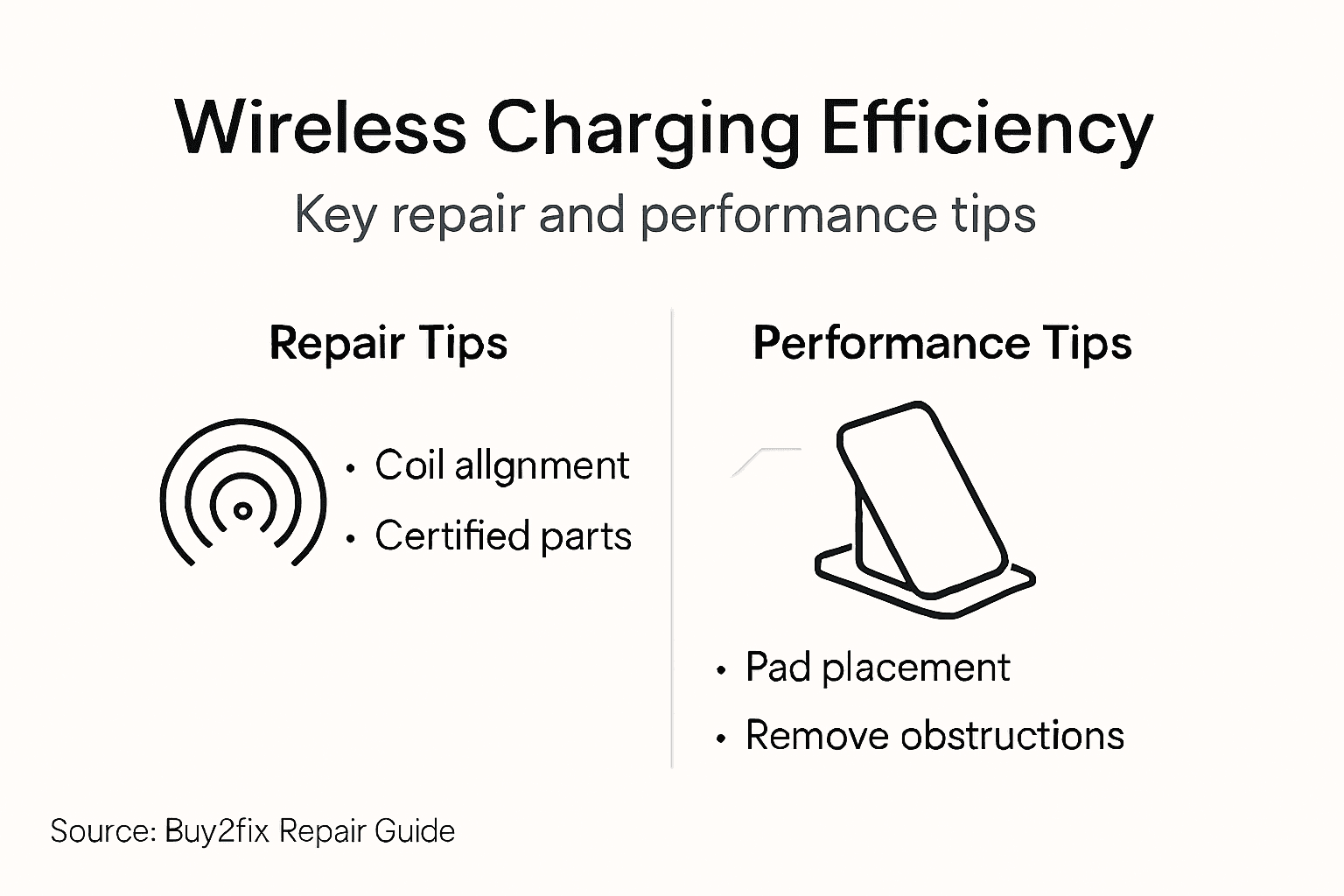
Coil alignment makes the biggest practical difference. Proper coil alignment and use of Qi certified chargers can improve charging speed and safety significantly. Many charging pads include alignment guides like raised rings or LED indicators. Teach customers to position phones carefully rather than casually tossing them onto pads.
Power output matters more than customers realize. A 5W charger takes twice as long as a 10W charger to deliver the same energy. For overnight charging, lower power works fine and may generate less heat. For quick top ups, recommend 15W chargers compatible with their specific phone models.
Pro Tip: Create a simple one page guide showing optimal charging pad placement for popular phone models you service frequently. Include photos demonstrating correct alignment and common mistakes. Customers appreciate practical visual references.
Physical obstructions between phone and charger reduce efficiency dramatically. PopSockets, magnetic mounts, credit card holders, and thick protective cases all interfere with the magnetic field coupling needed for power transfer. Recommend wireless charging accessories designed specifically for compatibility with wireless charging.
Heat management protects both battery health and charging efficiency. Wireless charging generates more heat than wired charging due to inherent inefficiencies in power transfer. Quality chargers include cooling fans or heat sinks, and phones throttle charging speed when temperatures rise above safe thresholds. Advise customers to charge in cool locations and avoid using phones intensively while wireless charging.
Explore Buy2fix Solutions for Wireless Charging Repairs
Mastering wireless charging repairs requires quality components and reliable information. Buy2fix provides certified replacement coils, power management ICs, and specialized tools for precise installation. Our extensive parts inventory covers popular models from iPhone to Samsung Galaxy, ensuring you find components that match original specifications.
Access expert repair guides through the Buy2fix blog, where detailed articles walk you through wireless charging diagnostics and common failure modes. Equip your workspace with mobile repair tools designed for delicate coil installation work. Start with repair basics guide fundamentals, then explore our replacement parts guide for component selection advice.
Frequently Asked Questions About Wireless Charging
Can I use any wireless charger to charge any smartphone?
Not all chargers provide universal compatibility despite Qi standardization. Certification ensures safe, efficient charging for most smartphones, but power delivery profiles vary by manufacturer. Using uncertified chargers risks poor performance and possible device damage from inadequate thermal protection. Check charging compatibility requirements for specific phone models before recommending chargers to customers.
What are the most common causes of wireless charging failures in phones?
Typical issues include poor coil alignment during installation, physical coil damage from prior repairs or impacts, and use of incompatible chargers causing slow or no charging. Foreign objects trapped between the coil and back panel also prevent proper magnetic coupling. Start wireless charging faults diagnosis by checking physical coil condition and testing with certified reference chargers to isolate problems.
Does wireless charging damage smartphone batteries faster than wired charging?
Scientific studies show no significant increase in battery wear compared to quality wired charging. Battery degradation with wireless charging is comparable to wired charging under normal use when using quality chargers. Proper temperature management matters more than charging method. Heat from any source accelerates lithium battery aging. Learn more about wireless charging battery health factors that truly impact longevity.
How can I optimize wireless charging performance for my customers?
Advise precise coil alignment with charging pad centers, recommend certified chargers with adequate power output, and suggest removing thick cases and metal objects between phone and charger. Monitor device temperature during charging and explain that phones automatically throttle speed when too warm. Share wireless charging optimization tips that balance convenience with battery health for long term satisfaction.
